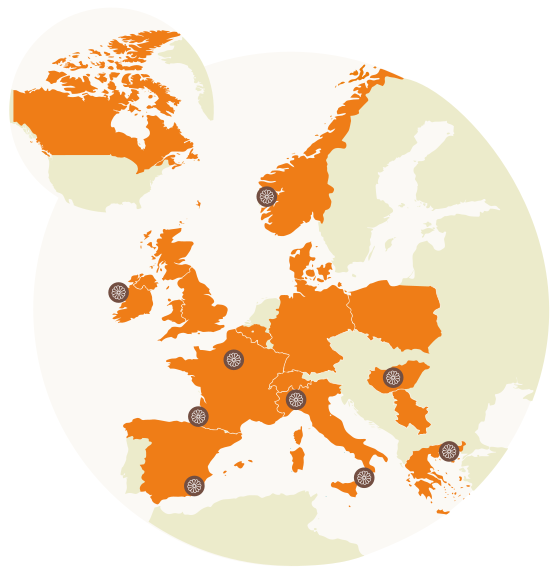
To improve knowledge on plant-pollinator interactions, ProPollSoil uses field samples from different soils all over Europe, spanning a wide range of climates, soils and land use types. ProPollSoil will assess management, soil compaction and soil pollution as potential soil and pollinator threats within a co-creation research approach in nine Case Study Areas across Europe
What are Case Study Areas?
A Case Study Area (CSA) is a real place with clear geographic boundaries where different people work together in order to study, test, and evaluate soil management practices and the way in which they affect soil pollinators. Researchers, farmers, policymakers, businesses, and citizens all work together in each CSA to come up with and test management plans for the health of soil and pollinators.
The nine CSAs cover the main geographic regions of Europe: the Atlantic, Mediterranean, Continental, Boreal, and Alpine. The CSAs include a variety of land-use systems, from arable and grassland landscapes to orchards and urban ecosystems. The network consists of core CSAs, which are the main places for co-creation and experimentation, and regular CSAs, which help the network by testing methods and making it easier to use them in other contexts.
Nestos Delta
Local context:
The Nestos Delta CSA is located in northern Greece and covers about 2.3 km² of intensive fruit production systems, with kiwi orchards being the most common type. The area is partly in a NATURA 2000 site, which means that farming there has to follow specific rules for using fewer pesticides and fertilizers and other environmental guidelines.
Land use type:
Fruit orchards
Main goals:
Improve pollinator habitats and manage orchard soil in high-input perennial cropping systems.
Potential soil management challenges:
Intensive tillage, pesticide contamination, and soil compaction are some of the main pressures on soil in the Nestos Delta CSA. These practices can affect soil structure, soil biodiversity, and the availability of suitable nesting and foraging habitats for pollinators that are soil dependent
Lead Partner

Ile-de-France
Local context:
The CSA is in a metropolitan area in northern France and covers about 1,600 km² of urban and peri-urban areas of Paris. The area has small-scale farms, community gardens, and peri-urban agricultural plots, all of which are set in a very urbanized area.
Land use type:
Urban and peri-urban
Main goals:
Farming in urban and peri-urban areas, where soil management practices have to deal with human-made pressures and goals for protecting biodiversity.
Potential soil management challenges:
Too much or wrong tillage, pesticide contamination, heavy metal pollution, and a gradual loss of soil fertility due to how land has been used in the past and how cities have grown. These pressures can have a big impact on how well soil works and how many kinds of pollinators there are in urban farming systems.
Lead Partner

Coteaux Gascons T
Local context:
CSA Coteaux Gascons is located in the southwest of France and covers approximately 2,600 km² of agricultural land. The region combines mixed farming systems with simultaneous cropping and livestock farming. The uniqueness of this area is mainly due to intensive agriculture (mainly cereals and oilseeds) and livestock farming as well as the continuous restoration of permanent pastures.
Land use type:
Intensive agricultural
Main goals:
This CSA aims at the collaboration of the involved bodies and the testing of alternative methods of soil management with the main aims of improving soil fertility and increasing the number of pollinators in the existing mixed cropping systems. The activities planned concern the teamwork of producers and local cooperatives for the collection of the appropriate data indicating the quality of the soil and pollinator populations and the examination of the way in which the intensity of agriculture, soil conditions and pollination services affect each other.
Potential soil management challenges:
Intensive use of pesticides and the reduction of soil fertility
Lead Partner
Milano
Local context:
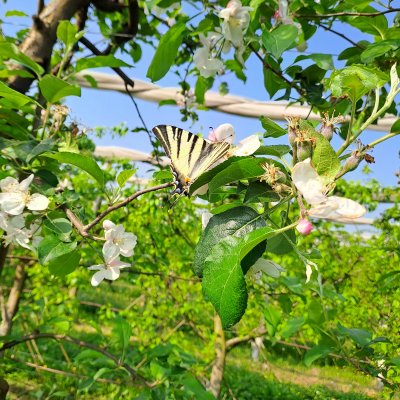
The CSA located in northern Italy covers approximately 90 km² of urban and peri-urban green spaces and agricultural lands. The area is urbanized and metropolitan and includes, among others, recreational areas, gardens, parks, farms, and protected areas. The CSA will focus on these local urban and peri-urban green infrastructures promoting pollinator-friendly practices in the most densely populated urban environments.
Land use type:
Urban greenspaces and peri-urban agricultural lands
Main goals:
This CSA aims at the collaboration of the involved bodies and the testing of alternative methods of nature management with the main aims of improving habitat quality and increasing the number of pollinators in the existing mixed cropping systems. The activities planned concern the teamwork of producers and local cooperatives for the collection of the appropriate data indicating the quality of the soil and pollinator populations and the examination of the way in which the intensity of agriculture, soil conditions and pollination services affect each other.
Potential soil management challenges:
Soil erosion and fertility loss, as well as the soil contamination by pollution
Lead Partner

Reggio Calabria
Local context:
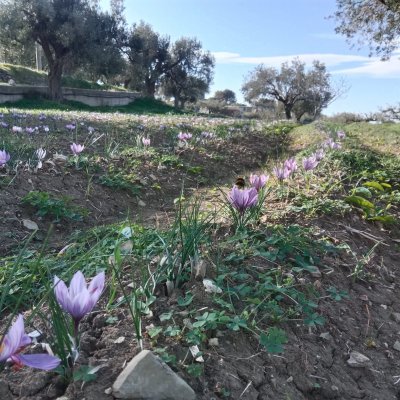
This CSA includes a wide range of Mediterranean agroecosystems ranging from coastal plains with mainly alluvial soils rich in clay and silt to hilly areas characterized by sandy and gravelly soils. For this reason, this CSA will focus mainly on coastal and hilly Mediterranean systems where there is soil contamination with the aim of proposing solutions for its restoration with the use of pollinator-friendly practices.
Land use type:
Mediterranean agro-ecosystems
Main goals:
One of the main objectives of this CSA is to assess the relationships and the degree of impact of pollinator populations on soil contamination. The aim is to implement more sustainable agricultural practices and land restoration practices that are friendly to pollinators in Mediterranean agroecosystems. This process will be carried out with the active participation of many and different stakeholders so that there is representation of local communities and authorities with a common opinion on the achievement of the above objectives.
Potential soil management challenges:
Soil fertility loss, pesticide contamination and soil erosion, as a result of intensive agricultural practices, as well as the climatic pressures that Mediterranean ecosystems are facing,
Lead Partner

Murcia
Local context:
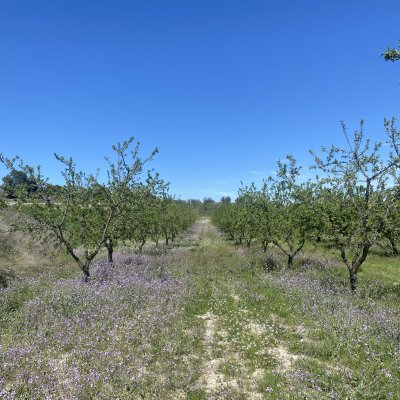
The Murcia CSA is located in southeastern Spain and covers approximately 3,000 km² of agricultural landscapes dominated by almond trees, in semi-arid environments. The area is home to approximately 800 different species of bees and according to experts, it is considered a biodiversity hotspot for pollinators. At the same time, the soil of the wider area is threatened by the ever-increasing intensification of agriculture.
Land use type:
Orchards and semi-arid agricultural systems
Main goals:
This CSA will focus on orchard systems (almonds) and semi-arid agricultural systems, with the ultimate goal of more sustainable and effective land management for the restoration of pollinator habitats in water-limited environments. Planned activities of Murcia CSA will include assessing the impacts of irrigation strategies, cover crops and pesticide reduction on soil health and pollinator diversity. Actions to strengthen collaboration with local farmers and agricultural stakeholders through participatory approaches should also be planned.
Potential soil management challenges:
The intensification of agricultural production combined with scarcity exacerbates the negative consequences that tillage practices, pesticide contamination and soil fertility loss have for the soil and, by extension, for soil-dependent pollinators.
Lead Partner

Hardangerfjord
Local context:
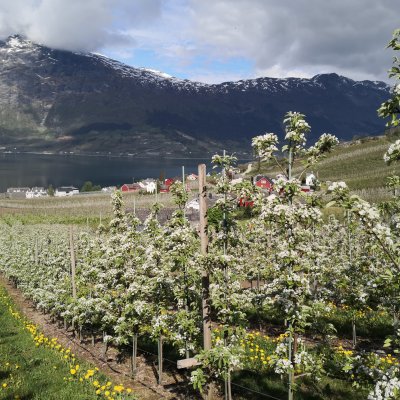
This CSA covers the fjordside horticultural areas approximately along the 180km-long Hardangerfjord in Western Norway. This area includes a wide range of intensive and mechanized orchards as well as smaller-scale non-mechanized and traditional organic farms. As a result, different intensities of pesticide use, and soil management are applied in the area. Therefore, a careful study of the area should be carried out and, where appropriate, targeted co-creation of sustainable solutions for both the soil and pollinators.
Land use type:
Pome fruit orchards, berry production, forestry, small areas of "summer farms" used for seasonal pasture
Main goals:
The main objective of this core CSA is to jointly design environmentally friendly solutions and practical proposals that will be applied to the orchards of the region and will be adapted to the Nordic fruit production systems. Within this framework, the main activities to be planned are the study of the relationships between climatic variables, soil properties and pollination success, as well as the organization of public awareness events focusing on sustainable orchard management and pollinator protection.
Potential soil management challenges:
Soil contamination by pesticides, tillage practices, and other practices that, in combination with changing climatic conditions, greatly affect soil structure, biodiversity of the area, and pollinator populations.
Lead Partner

Discovery Center
Local context:
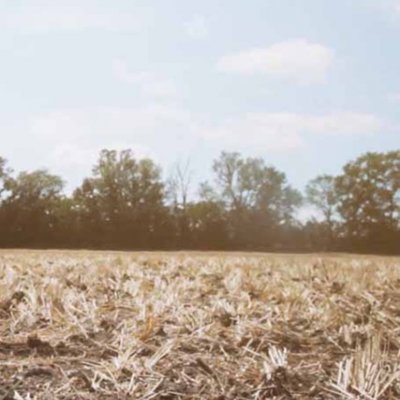
The Hungarian CSA is located on the Northern Great Plain and encompasses a diverse agricultural landscape dominated by cropland, but also includes grasslands, forests, orchards and semi-natural environments. The CSA will operate as a Living Lab aiming at more sustainable soil management and assessing productivity-biodiversity under real farming conditions with a shared vision of protecting soil-dependent pollinators.
Land use type:
Cropland, grasslands, forests, orchards and semi-natural environments
Main goals:
This CSA will test and develop pollinator-friendly crop rotations and soil management practices that improve soil health while maintaining agricultural productivity. In this context, the main impacts of different agricultural practices and activities on pollinator populations will be assessed. Subsequently, stakeholder meetings will be organised to support joint decision-making and to plan the implementation of field experiments under real conditions, allowing the testing of viable and pollinator-friendly solutions in the region.
Potential soil management challenges:
intensive tillage, pesticide contamination, soil compaction, and the use of non-sustainable soil management practices.
Lead Partner

Mullet Peninsula
Local context:
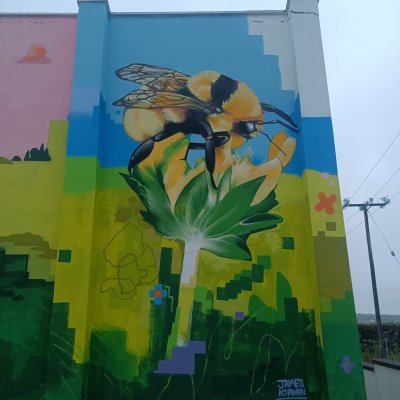
This CSA is located in western Ireland and covers about 120 km² of mostly agricultural land, where cows graze and hay and silage are cultivated. The NATURA 2000 network protects a lot of the area as it has significant ecological value. The CSA also includes a small town with initiatives designed to protect pollinators. The main focus of land use is on pasture-based grassland systems. This includes practices that are valuable for pollinators and soil health in coastal areas.
Land use type:
pasture-based grassland systems
Main goals:
The co-creation and development of sustainable grassland management practices in the region is the main objective of this core CSA. The assessment of soil quality and pollinator responses under applied alternative management practices will be a cornerstone in field trials and focused actions should be made to strengthen collaboration between researchers and local communities.
Potential soil management challenges:
Grazing management (timing and intensity), soil erosion and potentially pesticide use.
Lead Partner